
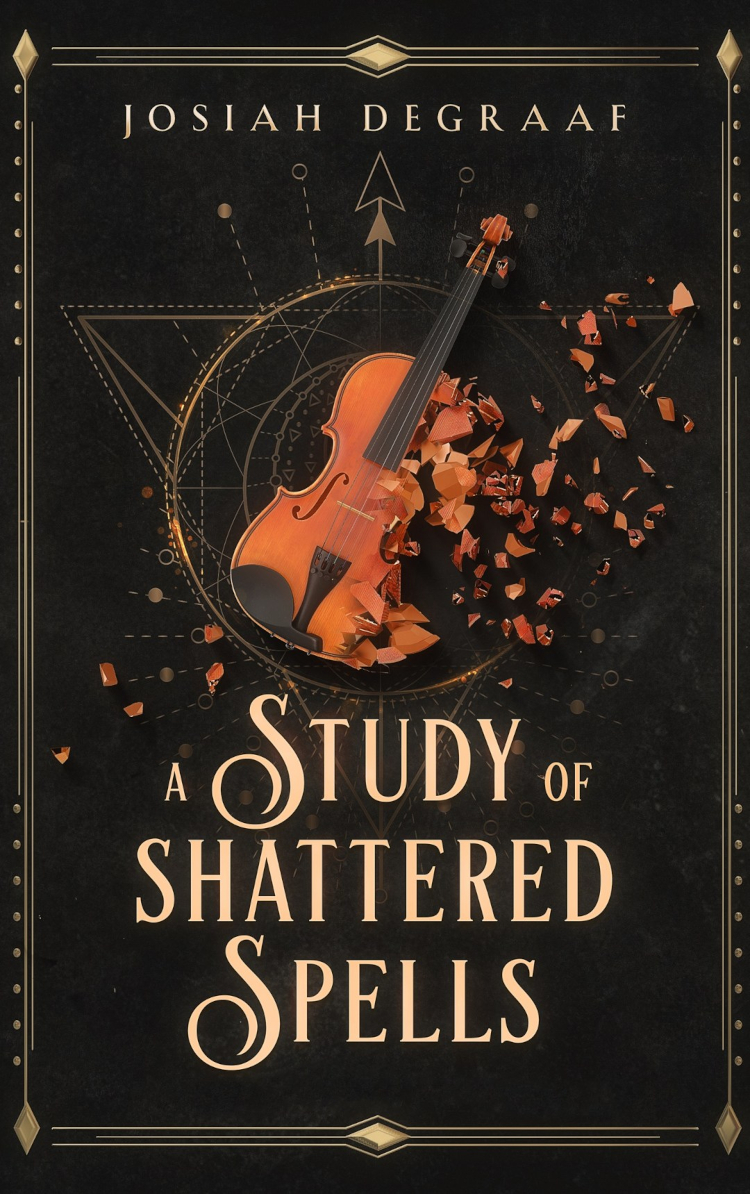
A Symphony of Redemption: When Magic and Morality Collide
In a genre often saturated with clear-cut heroes and villains, Josiah DeGraaf's A Study of Shattered Spells wade into murkier waters and emerges triumphant. This is a novel that refuses to provide easy answers, instead challenging readers to grapple alongside its characters with questions of grace, justice, and redemption. The result is a fantasy that resonates long after the final page.
My favorite element of DeGraaf's world-building is the musical magic system that underpins everything. Different magic flows through different musical instruments in ways that feel both mathematical and wonderfully creative. The way musical magic intertwines with combat, healing, and everyday life creates countless memorable moments that intrigue any fantasy enthusiast looking for something beyond the standard elemental or runic systems we've seen countless times before.
Where this novel truly sings, however, is in its characters. In his teacher, Kalina, DeGraaf has crafted a protagonist whose struggles feel achingly real and whose challenges leave room for both tremendous growth and heartbreaking mistakes. Neither Kalina nor her students conveniently make the right choice when the plot demands it. Instead, they struggle to learn, overcome their fears, stumble and take leaps of faith, knowing they will live with the consequences. Their obstacles are genuine tests of character that force them to examine who they are and who they want to become. The moral complexity permeating this narrative elevates this story above typical fantasy.
I particularly enjoyed how he explored when to offer second chances, when to extend grace, and when to demand justice. These philosophical questions emerge organically from the characters' relationships and circumstances. I found myself genuinely uncertain about what the characters should do, because no choice offered a perfect solution.
That said, readers who crave exhaustive world-building explanations may find themselves wanting more. The religious systems, in particular, hint at deeper lore and theological frameworks that remain partially unexplored. While these gaps don't hinder understanding of the plot or character motivations, those fascinating glimpses of broader religious traditions and beliefs left me curious for more detail.
For fantasy readers seeking complex morality and a thrilling plot, this novel delivers in spades. It's a thought-provoking, emotionally resonant journey that proves fantasy can be both entertaining and intellectually engaging.