
A Gilded Age Treasure: Edith Wharton's "The Buccaneers" Delivers Rich Historical Fiction
Edith Wharton's posthumously published novel The Buccaneers stands as a fascinating exploration of the collision between American wealth and British aristocracy during the Gilded Age.
This sweeping tale of ambitious young women storming the bastions of English society offers historical fiction readers exactly what they crave: authentic period detail, complex social dynamics, and characters whose flaws make them achingly human.
Not the Story You Watched
But you won't find any of that in the new Apple+ streaming series "based" on the novel.
The book and series share virtually nothing beyond character names and the basic premise. The streaming version takes extraordinary liberties, creating entirely new scenes, fundamentally altering the characters, and inserting thoroughly modern sensibilities into the period setting.
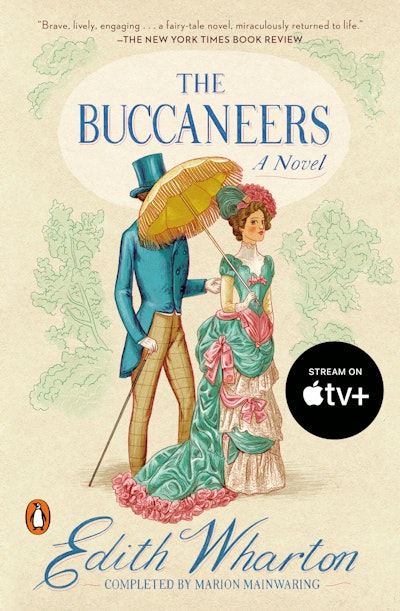
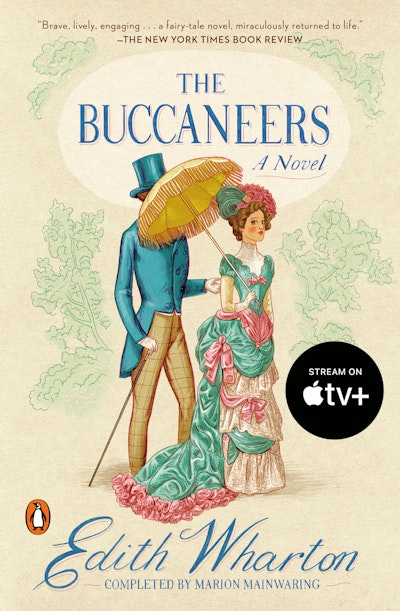
Don't believe me? Compare the previous cover of the book to the cover based on the movie.

If you're seeking the story you watched on screen, you won't find it here.
True to Its Time
Conversely, if (like me) you were disappointed by the streaming series' anachronistic approach, you'll likely appreciate Wharton's more historically grounded treatment. The novel remains faithful to its period, offering authentic Victorian and Edwardian attitudes without contemporary retrofitting.
The premise alone is delightfully entertaining. Wharton chronicles the adventures of wealthy American girls (nicknamed "buccaneers" for their brazen invasion of British high society) who set their sights on capturing titled but impoverished English aristocrats as husbands. It's a mercenary exchange on both sides: new money trading dollars for ancient prestige, while crumbling estates gain the financial infusion needed to maintain their grandeur. This transatlantic marriage market provides fertile ground for both romantic entanglements and biting social observation.
Be careful what you wish for
What elevates The Buccaneers beyond a romance is Wharton's examination of getting precisely what you think you want, only to discover the reality falls devastatingly short of the dream. The main character's journey exemplifies this theme beautifully. She grows from a naive young woman dazzled by titles into someone who recognizes the gilded cage she's entered. Her evolution feels genuine because Wharton doesn't shy away from her mistakes, and her gradual awakening to the consequences of her choices.
People, not paper dolls
Wharton populates her novel with a sprawling cast of characters, each flawed and recognizably human. From social-climbing mothers to cynical aristocrats, the personalities feel drawn from life rather than stock central casting. These are complicated individuals whose desires and disappointments drive the narrative forward.
There's just so many of them! The sheer number of players in Wharton's drama was occasionally overwhelming. I found myself backtracking to remember who was who and how they were related. I often wished for a glossary of characters to review.
Pretensions on both shores
I particularly like that Wharton exposes the hypocrisies on both sides of the Atlantic: American plutocrats desperate for the respectability that old money and titles confer, and British aristocrats willing to prostitute their heritage for cash. More poignantly, she reveals the particular trap awaiting women in this system and how the romantic fantasy of becoming a duchess or countess often meant imprisonment within suffocating conventions and loveless marriages.
The Buccaneers rewards patient readers willing to navigate its complex character landscape with a thoughtful meditation on ambition, disillusionment, and the courage required to acknowledge mistakes. The Buccaneers delivers satisfying reading, despite its occasionally overwhelming cast.
Rating: 4 out of 5 stars
111